
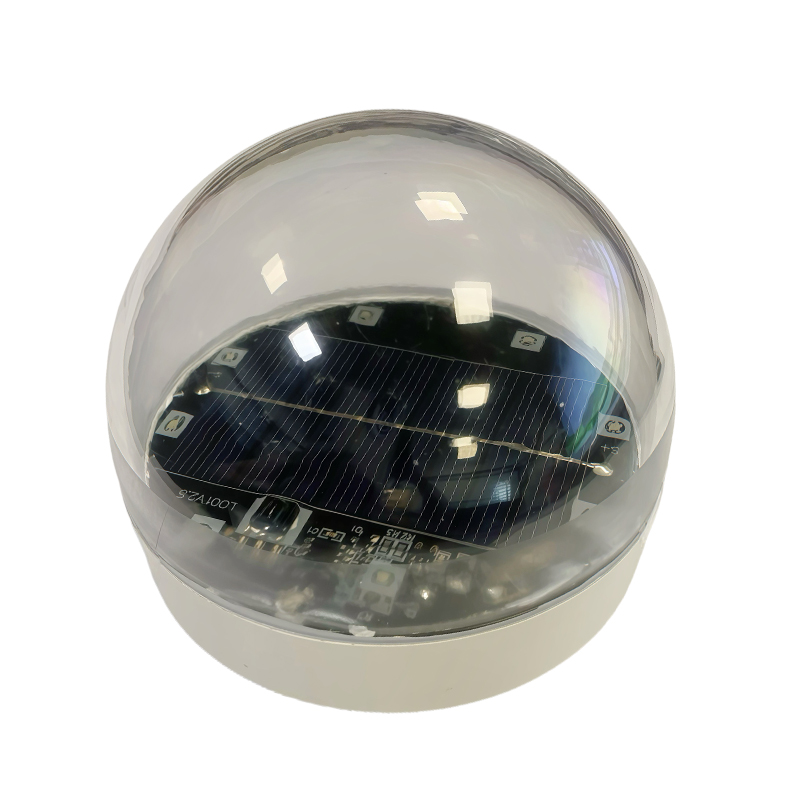


How do solar pool lights cope with chlorine or saltwater corrosion in pool water?
Release Time : 2026-02-19
In the modern pool lighting industry, durability and safety are indispensable. Solar pool lights, with their superior corrosion resistance, are becoming core equipment in high-frequency usage scenarios such as private pools, hotel resorts, and public water parks. They not only provide stunning lighting but also maintain stable performance in the chemically corrosive environment of chlorine-disinfected or saltwater pools, avoiding the risk of electrical leakage or damage to the lights due to corrosion.
1. Material Selection: The Physical Basis of Corrosion Resistance
The corrosion resistance of solar pool lights stems primarily from advancements in materials science. The outer shell is often made of 316 stainless steel, which has a higher molybdenum content than ordinary 304 stainless steel, effectively resisting pitting and crevice corrosion caused by chloride ions. Plastic components are made of highly weather-resistant ABS or polycarbonate, with added UV resistance and antioxidants to prevent brittleness caused by chemical aging. The internal circuit board is coated with conformal coating to isolate moisture and corrosive gases from contacting electronic components. This multi-layered material protection constructs the first line of defense against chemical corrosion at the physical level, ensuring structural integrity and electrical safety. While 316 stainless steel is more expensive, its long-term durability far surpasses that of ordinary materials, reducing replacement frequency.
2. Sealing Technology: The Core Technology for Isolating Corrosion
Preventing corrosive liquids from seeping into the interior of solar pool lights is crucial. High-quality products achieve an IP68 waterproof rating, employing laser welding or ultrasonic welding technology to ensure seamless fusion of the outer shell seams, eliminating the space for crevice corrosion. The battery compartment and LED module are surrounded by epoxy resin potting compound, forming a solid protective layer that protects internal components even if the outer shell is damaged. The sealing rings are made of special silicone material, with superior chlorine aging resistance compared to ordinary rubber. They do not harden or crack even after long-term immersion, ensuring stable sealing performance for years, preventing moisture corrosion of the circuitry, protecting the battery and LED chips from chemical damage, and ensuring long-term stable lighting function.
3. Surface Treatment: An Extra Barrier for Enhanced Corrosion Resistance
Metal components undergo passivation or electroplating to form a dense oxide film, preventing corrosive media from directly contacting the substrate. The plastic outer shell is coated with an anti-chemical corrosion coating to reduce chlorine adsorption and penetration. For models specifically designed for saltwater pools, a sacrificial anode protection design is added, prioritizing the corrosion of auxiliary metal components to protect the main structure. These surface treatment processes significantly enhance the survivability of the lights in harsh water conditions, extend their aesthetic and functional lifespan, prevent rust from polluting the water, and avoid impacting swimmers' health and the pool's aesthetics, providing a clean guarantee for high-end pool environments.
In summary, solar pool lights achieve superior performance against chlorine and saltwater corrosion through four layers of protection: material selection, sealing technology, surface treatment, and rigorous testing.
1. Material Selection: The Physical Basis of Corrosion Resistance
The corrosion resistance of solar pool lights stems primarily from advancements in materials science. The outer shell is often made of 316 stainless steel, which has a higher molybdenum content than ordinary 304 stainless steel, effectively resisting pitting and crevice corrosion caused by chloride ions. Plastic components are made of highly weather-resistant ABS or polycarbonate, with added UV resistance and antioxidants to prevent brittleness caused by chemical aging. The internal circuit board is coated with conformal coating to isolate moisture and corrosive gases from contacting electronic components. This multi-layered material protection constructs the first line of defense against chemical corrosion at the physical level, ensuring structural integrity and electrical safety. While 316 stainless steel is more expensive, its long-term durability far surpasses that of ordinary materials, reducing replacement frequency.
2. Sealing Technology: The Core Technology for Isolating Corrosion
Preventing corrosive liquids from seeping into the interior of solar pool lights is crucial. High-quality products achieve an IP68 waterproof rating, employing laser welding or ultrasonic welding technology to ensure seamless fusion of the outer shell seams, eliminating the space for crevice corrosion. The battery compartment and LED module are surrounded by epoxy resin potting compound, forming a solid protective layer that protects internal components even if the outer shell is damaged. The sealing rings are made of special silicone material, with superior chlorine aging resistance compared to ordinary rubber. They do not harden or crack even after long-term immersion, ensuring stable sealing performance for years, preventing moisture corrosion of the circuitry, protecting the battery and LED chips from chemical damage, and ensuring long-term stable lighting function.
3. Surface Treatment: An Extra Barrier for Enhanced Corrosion Resistance
Metal components undergo passivation or electroplating to form a dense oxide film, preventing corrosive media from directly contacting the substrate. The plastic outer shell is coated with an anti-chemical corrosion coating to reduce chlorine adsorption and penetration. For models specifically designed for saltwater pools, a sacrificial anode protection design is added, prioritizing the corrosion of auxiliary metal components to protect the main structure. These surface treatment processes significantly enhance the survivability of the lights in harsh water conditions, extend their aesthetic and functional lifespan, prevent rust from polluting the water, and avoid impacting swimmers' health and the pool's aesthetics, providing a clean guarantee for high-end pool environments.
In summary, solar pool lights achieve superior performance against chlorine and saltwater corrosion through four layers of protection: material selection, sealing technology, surface treatment, and rigorous testing.