


Can solar pool lights provide sufficient basic lighting during prolonged periods of overcast and rainy weather?
Release Time : 2025-12-12
In the field of outdoor landscape lighting, solar pool lights are an ideal choice for gardens, swimming pools, fountains, and other similar settings due to their advantages such as no wiring required, energy efficiency, environmental friendliness, and easy installation. However, many users often wonder: can they still maintain basic nighttime lighting functionality during prolonged periods of overcast and rainy weather with insufficient sunlight? This concern points directly to the core of solar lighting fixtures—the reliability of their energy harvesting and storage systems. Modern high-quality solar pool lights, through the synergy of efficient energy management, intelligent power consumption control, and superior energy storage design, provide reliable lighting even in environments with limited sunlight.
Firstly, the "energy heart" of solar pool lights—the built-in rechargeable battery—is crucial for handling overcast and rainy days. High-quality products generally use lithium-ion or lithium iron phosphate batteries with high cycle life. These batteries not only have high energy density and low self-discharge rate but also excellent low-temperature performance and charge/discharge stability. Even after several days without sufficient sunlight, the stored energy can still support the lights in basic operation mode. More importantly, battery capacity is not blindly increased, but scientifically matched with the overall light source power and expected usage time to ensure that the lights do not "go out" during typical low-light periods.
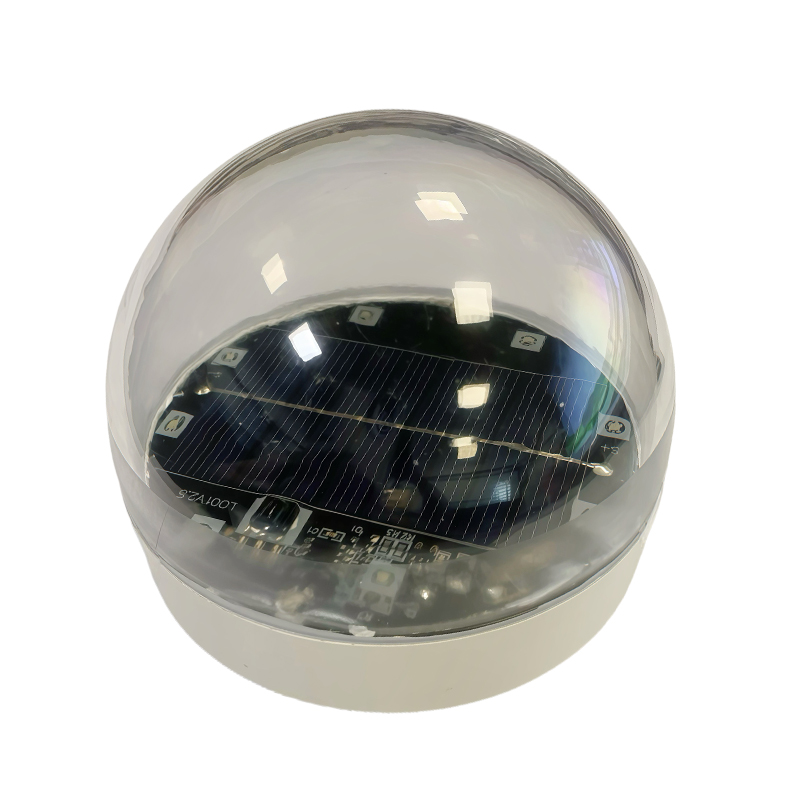
Secondly, the photoelectric conversion efficiency of the solar pool lights directly affects energy harvesting capabilities. Even on cloudy or overcast days, diffuse light still exists in the environment. High-efficiency monocrystalline or polycrystalline silicon solar panels can capture this weak light and convert it into electrical energy to slowly replenish the battery. Although the charging speed is much slower than on sunny days, this "trickle-down" charging is enough to delay depletion of the battery, giving the lights more operating time. Some high-end models also optimize the orientation and surface transmittance of the solar panels to further improve energy collection performance in low-light environments.
Furthermore, the solar pool lights' intelligent power management system plays the role of an "energy-saving steward" in ensuring battery life. When the system detects low battery power, it automatically activates energy-saving strategies: such as reducing LED brightness, shortening the nightly lighting duration, or switching to intermittent flashing mode. These subtle adjustments significantly extend usability, ensuring the lights remain on during critical nights (such as weekend parties or safe lighting periods). Light sensors ensure the lights only operate when truly needed—turning on at night and off at dawn, eliminating unnecessary power consumption.
Furthermore, the low power consumption of LEDs provides a natural advantage in terms of battery life. Compared to traditional light sources, LEDs emit clearly visible light even at extremely low power, making them particularly suitable for creating atmospheric landscape lighting. Colored LEDs, in particular, offer more vivid effects at lower brightness levels because the human eye is more sensitive to certain wavelengths (such as green and blue), further reducing energy consumption.
Of course, the overall sealing and circuit stability of solar pool lights are also crucial. IP68 waterproof rating not only protects the lights for long-term underwater use but also prevents moisture intrusion that could corrode the battery or circuitry—especially important in humid and rainy environments. A reliable structural design ensures that even after days of rain and wind, internal components remain in good condition, ready to illuminate the night.
In conclusion, while solar pool lights cannot operate indefinitely under extreme, prolonged darkness, their integrated strategy of efficient energy storage, intelligent power saving, and low-power lighting makes them perfectly capable of handling common periods of continuous rain and maintaining basic nighttime illumination for several days. They don't aim for dazzling brilliance, but rather provide just the right amount of soft light, silently protecting a corner of the courtyard after a storm. This is not only a victory for technology, but also a respect for the rhythms of nature—following the light of day while remembering to leave a gentle lamp for you in the darkness.
Firstly, the "energy heart" of solar pool lights—the built-in rechargeable battery—is crucial for handling overcast and rainy days. High-quality products generally use lithium-ion or lithium iron phosphate batteries with high cycle life. These batteries not only have high energy density and low self-discharge rate but also excellent low-temperature performance and charge/discharge stability. Even after several days without sufficient sunlight, the stored energy can still support the lights in basic operation mode. More importantly, battery capacity is not blindly increased, but scientifically matched with the overall light source power and expected usage time to ensure that the lights do not "go out" during typical low-light periods.
Secondly, the photoelectric conversion efficiency of the solar pool lights directly affects energy harvesting capabilities. Even on cloudy or overcast days, diffuse light still exists in the environment. High-efficiency monocrystalline or polycrystalline silicon solar panels can capture this weak light and convert it into electrical energy to slowly replenish the battery. Although the charging speed is much slower than on sunny days, this "trickle-down" charging is enough to delay depletion of the battery, giving the lights more operating time. Some high-end models also optimize the orientation and surface transmittance of the solar panels to further improve energy collection performance in low-light environments.
Furthermore, the solar pool lights' intelligent power management system plays the role of an "energy-saving steward" in ensuring battery life. When the system detects low battery power, it automatically activates energy-saving strategies: such as reducing LED brightness, shortening the nightly lighting duration, or switching to intermittent flashing mode. These subtle adjustments significantly extend usability, ensuring the lights remain on during critical nights (such as weekend parties or safe lighting periods). Light sensors ensure the lights only operate when truly needed—turning on at night and off at dawn, eliminating unnecessary power consumption.
Furthermore, the low power consumption of LEDs provides a natural advantage in terms of battery life. Compared to traditional light sources, LEDs emit clearly visible light even at extremely low power, making them particularly suitable for creating atmospheric landscape lighting. Colored LEDs, in particular, offer more vivid effects at lower brightness levels because the human eye is more sensitive to certain wavelengths (such as green and blue), further reducing energy consumption.
Of course, the overall sealing and circuit stability of solar pool lights are also crucial. IP68 waterproof rating not only protects the lights for long-term underwater use but also prevents moisture intrusion that could corrode the battery or circuitry—especially important in humid and rainy environments. A reliable structural design ensures that even after days of rain and wind, internal components remain in good condition, ready to illuminate the night.
In conclusion, while solar pool lights cannot operate indefinitely under extreme, prolonged darkness, their integrated strategy of efficient energy storage, intelligent power saving, and low-power lighting makes them perfectly capable of handling common periods of continuous rain and maintaining basic nighttime illumination for several days. They don't aim for dazzling brilliance, but rather provide just the right amount of soft light, silently protecting a corner of the courtyard after a storm. This is not only a victory for technology, but also a respect for the rhythms of nature—following the light of day while remembering to leave a gentle lamp for you in the darkness.