
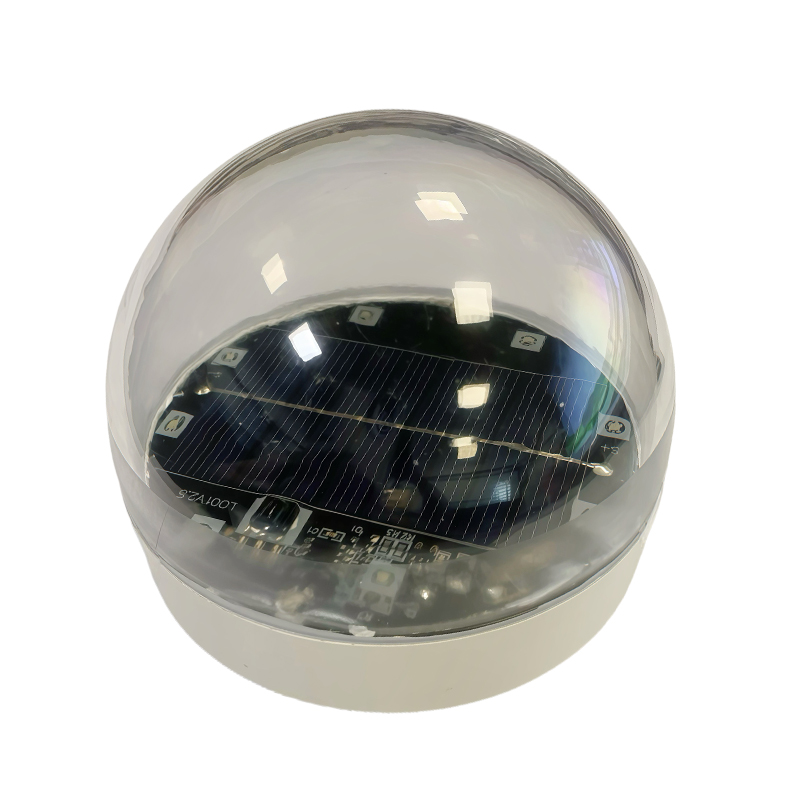


How Does IP68 Waterproofing Ensure the Longevity of Solar Pool Lights in Submerged Environments?
Release Time : 2026-04-09
The integration of lighting into aquatic environments represents a sophisticated intersection of electrical engineering and landscape architecture. Solar pool lights have emerged as a popular solution for illuminating these spaces, offering a blend of energy efficiency and aesthetic enhancement. However, the aquatic environment is notoriously hostile to electronic components. Water, particularly when infused with chemicals like chlorine or salt, acts as a potent conductor that can rapidly degrade circuitry. In this context, the Ingress Protection (IP) rating becomes the definitive standard for durability. Specifically, the IP68 rating is not merely a marketing label but a critical engineering specification that ensures the longevity and reliability of solar pool lights when subjected to the rigors of submerged operation.
To understand how IP68 ensures longevity, one must first decode the standard itself. The IP code, established by the International Electrotechnical Commission (IEC), consists of two digits. The first digit, '6', represents the highest level of protection against solid objects. It signifies that the solar pool light is "dust-tight," meaning no ingress of dust is possible. While this might seem irrelevant for a submerged device, it is crucial for the manufacturing and storage phases, as well as for the integrity of the internal components against microscopic particulate matter that could compromise the seal over time. The second digit, '8', is the defining characteristic for aquatic use. It indicates that the device is suitable for continuous immersion in water under conditions specified by the manufacturer, typically exceeding 1 meter of depth.
The primary mechanism by which IP68 waterproofing extends the lifespan of solar pool lights is through hermetic sealing. Achieving an IP68 rating requires more than just a rubber gasket; it often involves potting the electronic components. Potting is a process where the internal circuitry—the battery, the LED driver, and the solar charging board—is encased in a solid resin or gel. This encapsulation serves a dual purpose. First, it physically prevents water from coming into contact with the solder joints and copper traces, thereby eliminating the risk of short circuits. Second, it provides structural reinforcement, protecting the delicate components from the mechanical stress of water pressure and vibration. This level of protection is what distinguishes a long-lasting IP68 light from a standard IP67 light, which is only rated for temporary immersion.
Chemical resistance is another vital aspect of longevity provided by IP68-rated materials. Swimming pools are chemically aggressive environments, treated with chlorine, bromine, or salt to maintain hygiene. These substances are highly corrosive to metals and can degrade standard plastics. To meet the IP68 standard, the housing of the solar pool light is typically constructed from high-grade stainless steel (such as 316L) or advanced engineering plastics like polycarbonate or ABS. These materials are selected for their ability to withstand chemical attack without degrading, cracking, or discoloring. By resisting the corrosive action of pool chemicals, the housing maintains its structural integrity, ensuring that the waterproof seal remains intact season after season.
Thermal management is a subtle but critical factor in the longevity of submerged electronics, and IP68 designs must account for this. While water acts as a heat sink, helping to dissipate the heat generated by the LEDs, the sealed nature of an IP68 enclosure can trap heat if not designed correctly. High-quality IP68 solar lights utilize the thermal conductivity of their metal housing to transfer heat from the internal components to the surrounding water. This prevents the LEDs and the battery from overheating, which is a common cause of premature failure in lighting products. By maintaining an optimal operating temperature, the IP68 design preserves the lumen output of the LEDs and the charge-holding capacity of the battery over the long term.
The "Automatic Photosensitivity" feature found in these lights also relies heavily on the integrity of the IP68 seal. These sensors allow the light to detect dusk and dawn, turning the unit on and off without manual intervention. For this to function reliably underwater, the sensor must be protected from moisture ingress that could cause false readings or corrosion. An IP68 rating ensures that the photosensitive components are shielded, allowing for consistent automation. This reliability prevents the battery from being drained during daylight hours or failing to charge due to sensor malfunction, thereby optimizing the energy cycle and extending the battery's service life.
Furthermore, IP68 waterproofing provides resilience against biological fouling. In a pool or garden fountain, algae and biofilm can accumulate on surfaces. If a light fixture has microscopic gaps or crevices (which would fail the IP68 standard), these organisms can colonize the interior, producing acids that degrade the electronics. The seamless, smooth surface required for an IP68 rating makes it difficult for algae to gain a foothold, keeping the light clean and ensuring that the solar panel—if externally mounted or part of a floating unit—remains unobstructed for maximum energy absorption. This biological resistance is an often-overlooked benefit that contributes significantly to the maintenance-free operation of the device.
In the context of "Garden Fountain Special Lights" and "Villa Garden Landscape Lights," the aesthetic longevity is just as important as the functional longevity. IP68-rated lights are designed to prevent water ingress that leads to internal condensation. Condensation inside the lens can scatter light, reducing the brilliance of the "Colorful Lights" and creating a foggy, unattractive appearance. By maintaining a dry internal environment, IP68 waterproofing ensures that the optical clarity of the lens is preserved, keeping the colors vibrant and the light output sharp. This ensures that the visual impact of the landscape design remains consistent, enhancing the property's value and appeal.
Ultimately, the IP68 rating is a comprehensive guarantee of quality. It signifies that the solar pool light has undergone rigorous testing, including submersion tests, thermal cycling, and pressure testing. It assures the user that the product is not merely water-resistant, but waterproof to a degree that allows for permanent submersion. This peace of mind allows homeowners and landscape architects to utilize these lights in deep pools, fountains, and ponds without the fear of electrical failure or safety hazards. By effectively sealing out the elements that cause decay, IP68 waterproofing transforms a fragile electronic device into a durable, long-lasting fixture capable of withstanding the demanding underwater world.
To understand how IP68 ensures longevity, one must first decode the standard itself. The IP code, established by the International Electrotechnical Commission (IEC), consists of two digits. The first digit, '6', represents the highest level of protection against solid objects. It signifies that the solar pool light is "dust-tight," meaning no ingress of dust is possible. While this might seem irrelevant for a submerged device, it is crucial for the manufacturing and storage phases, as well as for the integrity of the internal components against microscopic particulate matter that could compromise the seal over time. The second digit, '8', is the defining characteristic for aquatic use. It indicates that the device is suitable for continuous immersion in water under conditions specified by the manufacturer, typically exceeding 1 meter of depth.
The primary mechanism by which IP68 waterproofing extends the lifespan of solar pool lights is through hermetic sealing. Achieving an IP68 rating requires more than just a rubber gasket; it often involves potting the electronic components. Potting is a process where the internal circuitry—the battery, the LED driver, and the solar charging board—is encased in a solid resin or gel. This encapsulation serves a dual purpose. First, it physically prevents water from coming into contact with the solder joints and copper traces, thereby eliminating the risk of short circuits. Second, it provides structural reinforcement, protecting the delicate components from the mechanical stress of water pressure and vibration. This level of protection is what distinguishes a long-lasting IP68 light from a standard IP67 light, which is only rated for temporary immersion.
Chemical resistance is another vital aspect of longevity provided by IP68-rated materials. Swimming pools are chemically aggressive environments, treated with chlorine, bromine, or salt to maintain hygiene. These substances are highly corrosive to metals and can degrade standard plastics. To meet the IP68 standard, the housing of the solar pool light is typically constructed from high-grade stainless steel (such as 316L) or advanced engineering plastics like polycarbonate or ABS. These materials are selected for their ability to withstand chemical attack without degrading, cracking, or discoloring. By resisting the corrosive action of pool chemicals, the housing maintains its structural integrity, ensuring that the waterproof seal remains intact season after season.
Thermal management is a subtle but critical factor in the longevity of submerged electronics, and IP68 designs must account for this. While water acts as a heat sink, helping to dissipate the heat generated by the LEDs, the sealed nature of an IP68 enclosure can trap heat if not designed correctly. High-quality IP68 solar lights utilize the thermal conductivity of their metal housing to transfer heat from the internal components to the surrounding water. This prevents the LEDs and the battery from overheating, which is a common cause of premature failure in lighting products. By maintaining an optimal operating temperature, the IP68 design preserves the lumen output of the LEDs and the charge-holding capacity of the battery over the long term.
The "Automatic Photosensitivity" feature found in these lights also relies heavily on the integrity of the IP68 seal. These sensors allow the light to detect dusk and dawn, turning the unit on and off without manual intervention. For this to function reliably underwater, the sensor must be protected from moisture ingress that could cause false readings or corrosion. An IP68 rating ensures that the photosensitive components are shielded, allowing for consistent automation. This reliability prevents the battery from being drained during daylight hours or failing to charge due to sensor malfunction, thereby optimizing the energy cycle and extending the battery's service life.
Furthermore, IP68 waterproofing provides resilience against biological fouling. In a pool or garden fountain, algae and biofilm can accumulate on surfaces. If a light fixture has microscopic gaps or crevices (which would fail the IP68 standard), these organisms can colonize the interior, producing acids that degrade the electronics. The seamless, smooth surface required for an IP68 rating makes it difficult for algae to gain a foothold, keeping the light clean and ensuring that the solar panel—if externally mounted or part of a floating unit—remains unobstructed for maximum energy absorption. This biological resistance is an often-overlooked benefit that contributes significantly to the maintenance-free operation of the device.
In the context of "Garden Fountain Special Lights" and "Villa Garden Landscape Lights," the aesthetic longevity is just as important as the functional longevity. IP68-rated lights are designed to prevent water ingress that leads to internal condensation. Condensation inside the lens can scatter light, reducing the brilliance of the "Colorful Lights" and creating a foggy, unattractive appearance. By maintaining a dry internal environment, IP68 waterproofing ensures that the optical clarity of the lens is preserved, keeping the colors vibrant and the light output sharp. This ensures that the visual impact of the landscape design remains consistent, enhancing the property's value and appeal.
Ultimately, the IP68 rating is a comprehensive guarantee of quality. It signifies that the solar pool light has undergone rigorous testing, including submersion tests, thermal cycling, and pressure testing. It assures the user that the product is not merely water-resistant, but waterproof to a degree that allows for permanent submersion. This peace of mind allows homeowners and landscape architects to utilize these lights in deep pools, fountains, and ponds without the fear of electrical failure or safety hazards. By effectively sealing out the elements that cause decay, IP68 waterproofing transforms a fragile electronic device into a durable, long-lasting fixture capable of withstanding the demanding underwater world.