
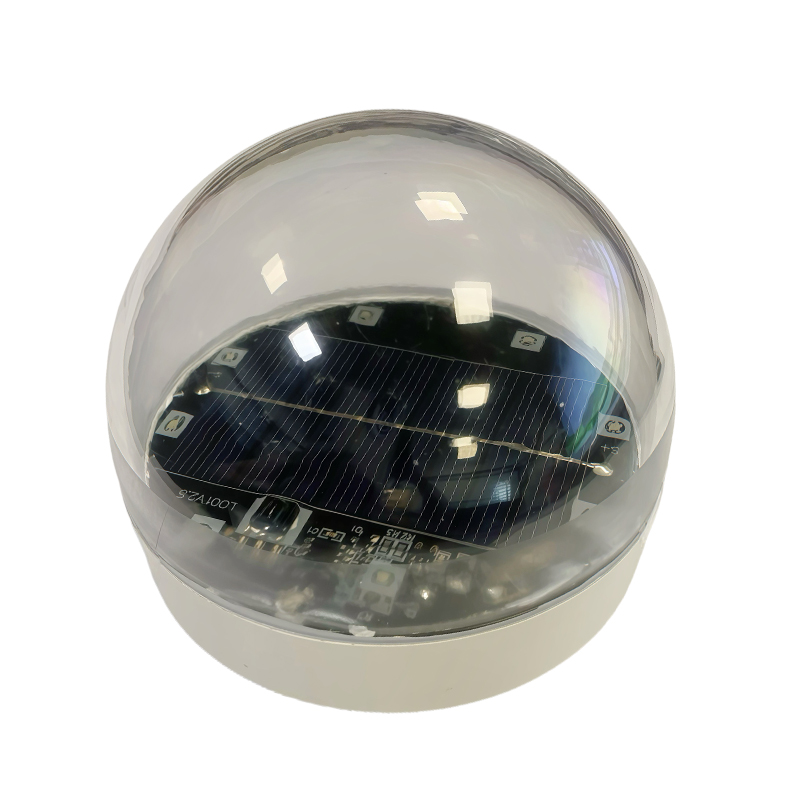


How do solar pool lights achieve their antifreeze and drainage mechanisms in low-temperature environments?
Release Time : 2026-04-14
In low-temperature environments, the anti-freeze drainage mechanism of solar pool lights is crucial for ensuring stable operation. Solar pool lights typically rely on solar panels to collect solar energy, converting it into electricity which is stored in internal batteries to power nighttime illumination. However, when ambient temperatures drop below freezing, moisture inside the light fixture may freeze and expand, potentially causing pipes or the lamp body to rupture, severely impacting its lifespan. Therefore, the design of the anti-freeze drainage mechanism must balance structural optimization and functional implementation to cope with the challenges of low temperatures.
The anti-freeze drainage mechanism of solar pool lights primarily relies on a reasonable pipe layout. The water circulation pipes inside the light fixture are usually designed with an incline, ensuring that water flows naturally to the drain under gravity. Before the onset of low temperatures, the system monitors the ambient temperature using sensors. When the temperature approaches freezing, the drainage process is automatically initiated. At this time, a water pump draws residual water in the pipes back to the collection device or directly discharges it to the outside of the lamp body through a one-way valve, preventing water retention. This active drainage method effectively reduces the risk of icing, especially suitable for areas with large diurnal temperature variations.
Some high-end solar pool lights are also equipped with an electric heating tape auxiliary anti-freeze system. Electric heating tape is a device that converts electrical energy into heat energy. It is applied tightly to the outer wall of pipes or critical parts of the lamp body. When a temperature sensor detects a low temperature, the system automatically activates the heating tape, generating uniform heat to maintain the temperature inside the pipe above freezing. This combination of passive heating and active drainage further enhances the reliability of freeze protection, making it particularly suitable for extremely cold environments. However, it is important to note that the heating tape must work in conjunction with a temperature control module to avoid energy waste or overheating risks.
Material selection is also a crucial aspect of the freeze protection and drainage mechanism. Solar pool lights often use low-temperature resistant, impact-resistant engineering plastics or stainless steel for their pipes and lamp bodies. These materials maintain their toughness at low temperatures, reducing the risk of cracking due to freezing. Simultaneously, the pipe joints are sealed to prevent external moisture infiltration and avoid structural damage caused by the expansion of internal ice. Some products also fill the lamp body with insulation materials, such as polyurethane foam, to slow heat loss and extend the effective time of the drainage mechanism.
The introduction of intelligent control systems makes the freeze protection and drainage mechanism even more efficient. Modern solar pool lights are typically equipped with microprocessors that monitor ambient temperature, humidity, and equipment operating status in real time. When the system predicts low temperatures, it adjusts the drainage cycle in advance, increasing drainage frequency or extending drainage time to ensure no residual water remains in the pipes. Furthermore, intelligent control can optimize antifreeze strategies based on historical data, such as automatically switching to deep drainage mode during prolonged periods of low temperatures to minimize the risk of icing.
User operating habits also significantly impact antifreeze effectiveness. Before the cold season arrives, users can manually check the drainage function of the lights, clearing debris or sediment from the pipes to ensure smooth water flow. Some products also feature a manual drainage button, allowing users to actively trigger the drainage program during low-temperature warnings, supplementing the automatic system. In addition, regularly maintaining battery performance to prevent insufficient power from causing the drainage pump or heating cable to malfunction is also crucial for ensuring the reliability of the antifreeze mechanism.
The antifreeze drainage mechanism of solar pool lights achieves effective adaptation to low-temperature environments through multi-dimensional design including pipe optimization, heating cable assistance, material upgrades, intelligent control, and user maintenance. These mechanisms not only extend equipment lifespan but also reduce maintenance costs caused by icing, providing a stable and reliable solution for outdoor lighting. With technological advancements, the antifreeze performance of solar pool lights will be further improved in the future, enabling applications in more cold regions.